Nutrition Basics: Building a Healthy Plate
Good nutrition is the foundation of good health. It supports your energy, your immune system, your weight and your long-term risk of many diseases. Yet eating well does not have to be complicated. This article covers the basics — the major nutrients your body needs, how to build a balanced plate, and a few simple habits that add up over time.
The Major Nutrients
Foods provide nutrients that fall into a few broad groups:
- Carbohydrates — the body's main energy source. Favor complex carbohydrates from whole grains, vegetables and legumes over refined sugars.
- Proteins — needed to build and repair tissue. Good sources include fish, poultry, beans, eggs, dairy and nuts.
- Fats — needed in moderation. Favor unsaturated fats from fish, nuts, seeds and olive oil; limit saturated and trans fats.
- Vitamins and minerals — needed in small amounts for countless body functions. A varied diet rich in vegetables and fruit supplies most of them.
- Fiber — supports digestion and heart health; see our article on dietary fiber.
- Water — essential to nearly every bodily process.
Building a Balanced Plate
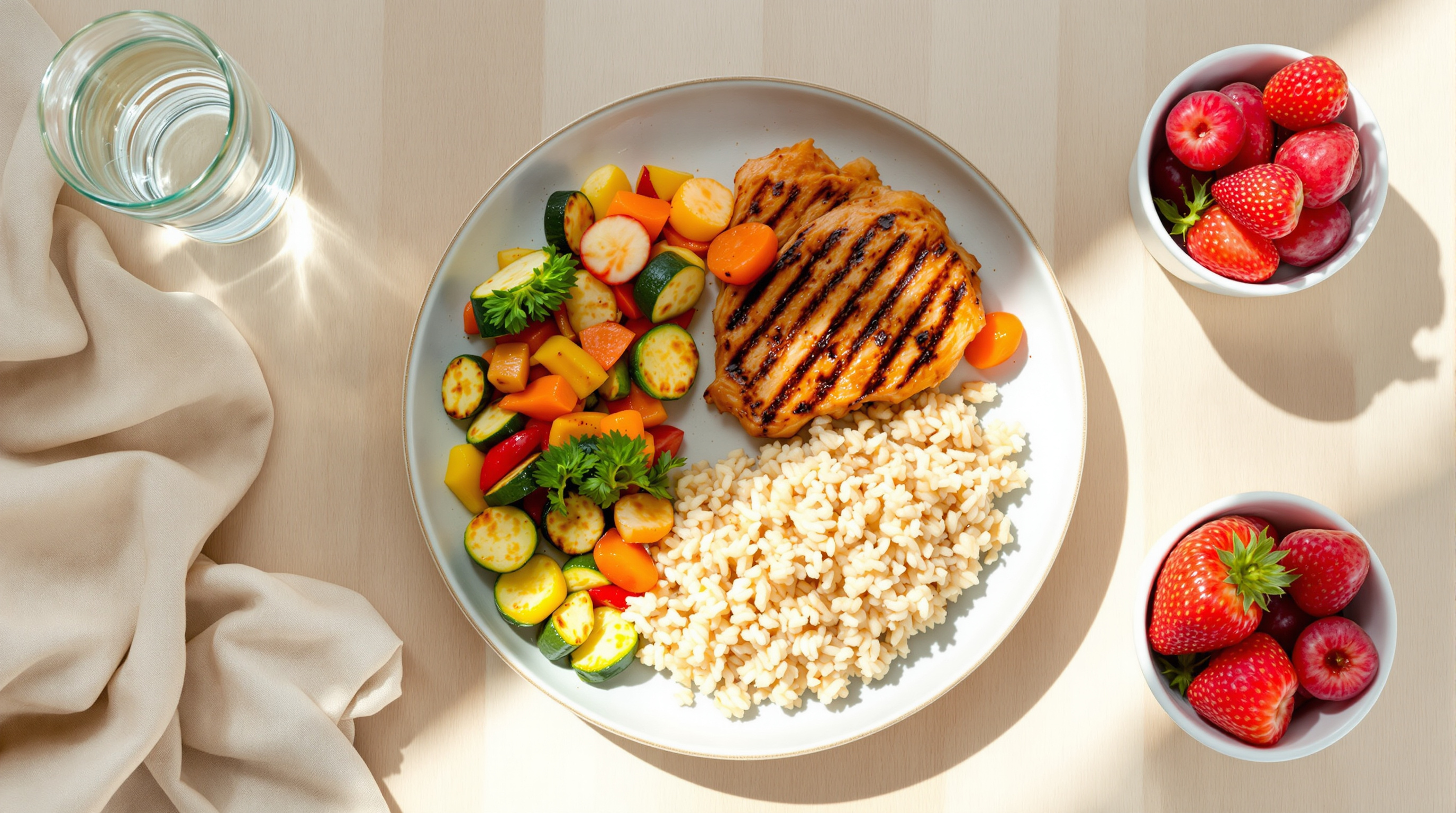
A simple, memorable approach is to picture your plate in sections:
- Fill about half with vegetables and fruit.
- Fill about one quarter with whole grains.
- Fill about one quarter with lean protein.
- Add a serving of low-fat dairy or a dairy alternative, and choose water as your main drink.
This balance naturally provides a good mix of nutrients without the need for counting.
Portion Sizes
Even healthy foods provide calories, so portion size matters. Useful reference points: a serving of cooked grains or pasta is about the size of a fist; a serving of meat or fish is about the size of a deck of cards; a serving of cheese is about the size of two dice. Eating slowly and stopping when comfortably full helps avoid overeating.
A Note on Supplements
Food first is the rule that serves most people best. A varied diet delivers nutrients in combinations that pills cannot copy, and more of a vitamin is not automatically better — several are harmful in excess. Supplements do have legitimate uses: vitamin D where sunlight is scarce, B-12 for many older adults and for vegans, folic acid in pregnancy. But they work best as targeted additions recommended by a clinician or registered dietitian who knows your situation, not as insurance scattered over an unexamined diet. If you take any, mention every one at your next check-up.
Simple, Sustainable Habits
- Eat a variety of colorful whole foods.
- Limit sugary drinks and heavily processed foods.
- Cook at home when you can, so you control ingredients.
- Read nutrition labels to compare products.
- Make changes gradually — small, lasting habits beat short-lived restriction.
Authoritative Resources
For trusted, practical nutrition guidance, see MyPlate from the U.S. Department of Agriculture, the Dietary Guidelines for Americans, and the Nutrition.gov portal.
Related reading: Losing Weight Safely, Eating for a Healthy Heart, and our nutrition software page. Return to the health article index.