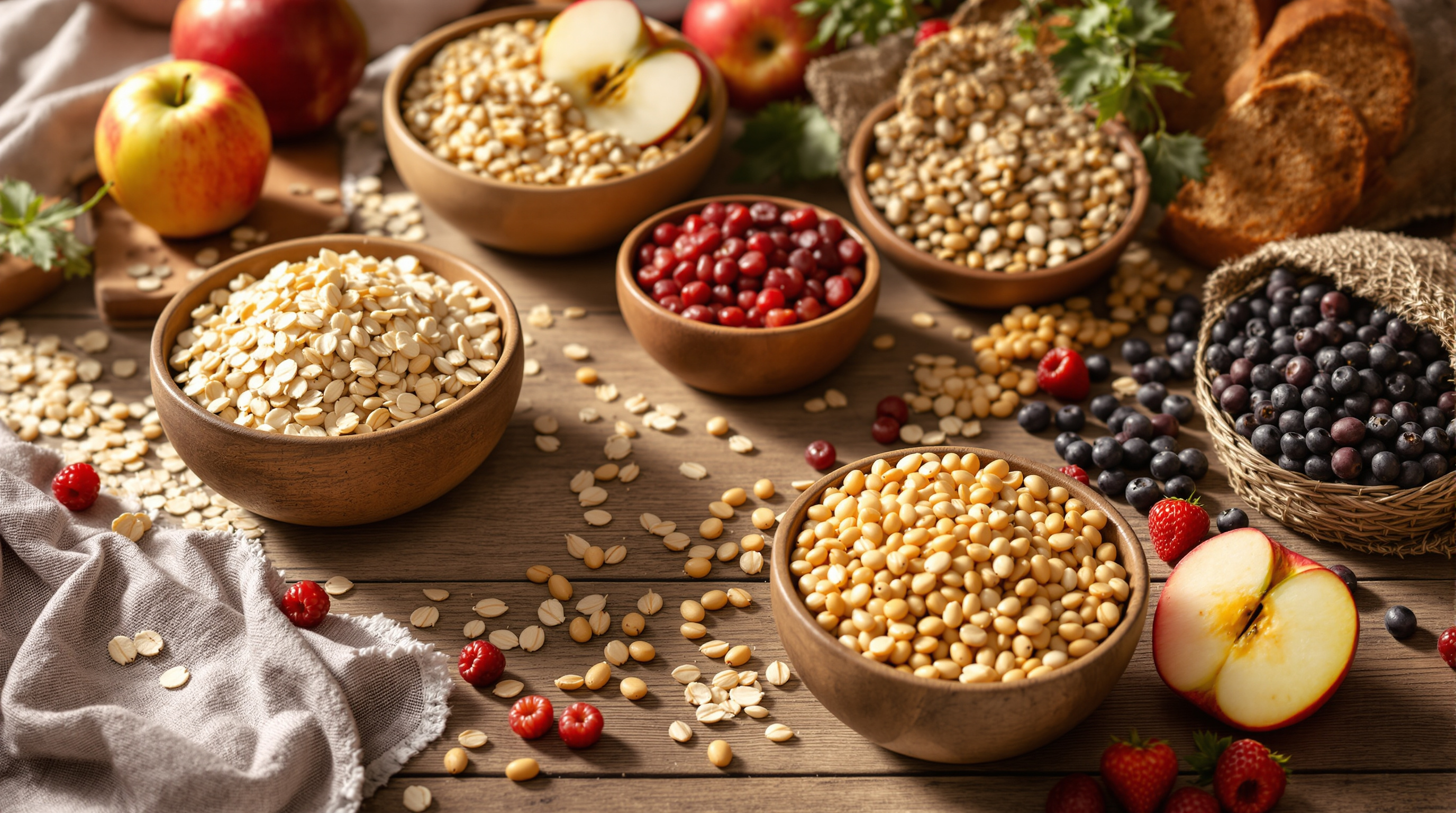
Dietary Fiber and Why It Matters
Dietary fiber is the part of plant foods your body cannot fully digest. Although it passes through largely intact, fiber does important work along the way — supporting digestion, helping control blood sugar and cholesterol, and contributing to a feeling of fullness. Most people fall short of the recommended amount, so fiber is one of the simplest, highest-value additions you can make to your diet.
Two Kinds of Fiber
- Soluble fiber dissolves in water to form a gel. It can help lower LDL cholesterol and steady blood sugar. Good sources include oats, beans, lentils, apples, citrus and barley.
- Insoluble fiber does not dissolve in water. It adds bulk and helps food move through the digestive system, supporting regularity. Good sources include whole-wheat foods, bran, nuts and many vegetables.
Most plant foods contain a mix of both, so a varied diet of whole foods naturally provides both kinds.
The Benefits of Fiber
- Digestive health — fiber promotes regularity and supports a healthy gut.
- Heart health — soluble fiber can help lower cholesterol; see Eating for a Healthy Heart.
- Blood sugar — fiber slows the absorption of sugar, helping with steadier energy and blood-sugar control.
- Weight management — high-fiber foods are filling, which can help with losing weight safely.
How Much Do You Need?
General guidance suggests most adults aim for roughly 25 to 38 grams of fiber a day, though needs vary by age and sex. Rather than counting grams, a practical goal is to make whole, plant-based foods a regular part of every meal.
Best Food Sources
- Whole grains — oats, brown rice, whole-wheat bread and pasta
- Legumes — beans, lentils and peas
- Fruit — apples, pears, berries and oranges (with the skin where edible)
- Vegetables — broccoli, carrots, leafy greens and many others
- Nuts and seeds
Increase fiber gradually and drink plenty of water to help your body adjust comfortably.
Authoritative Resources
For more on fiber and healthy eating, see the Nutrition.gov guide to carbohydrates and fiber, the American Heart Association, and the MedlinePlus dietary fiber page.
Related reading: Nutrition Basics, Lowering High Blood Cholesterol, and Sodium, Salt and Your Health. Return to the health article index.